
What foraging advice may k*ll you?
The Universal Edibility Test shouldn't be taught or used!

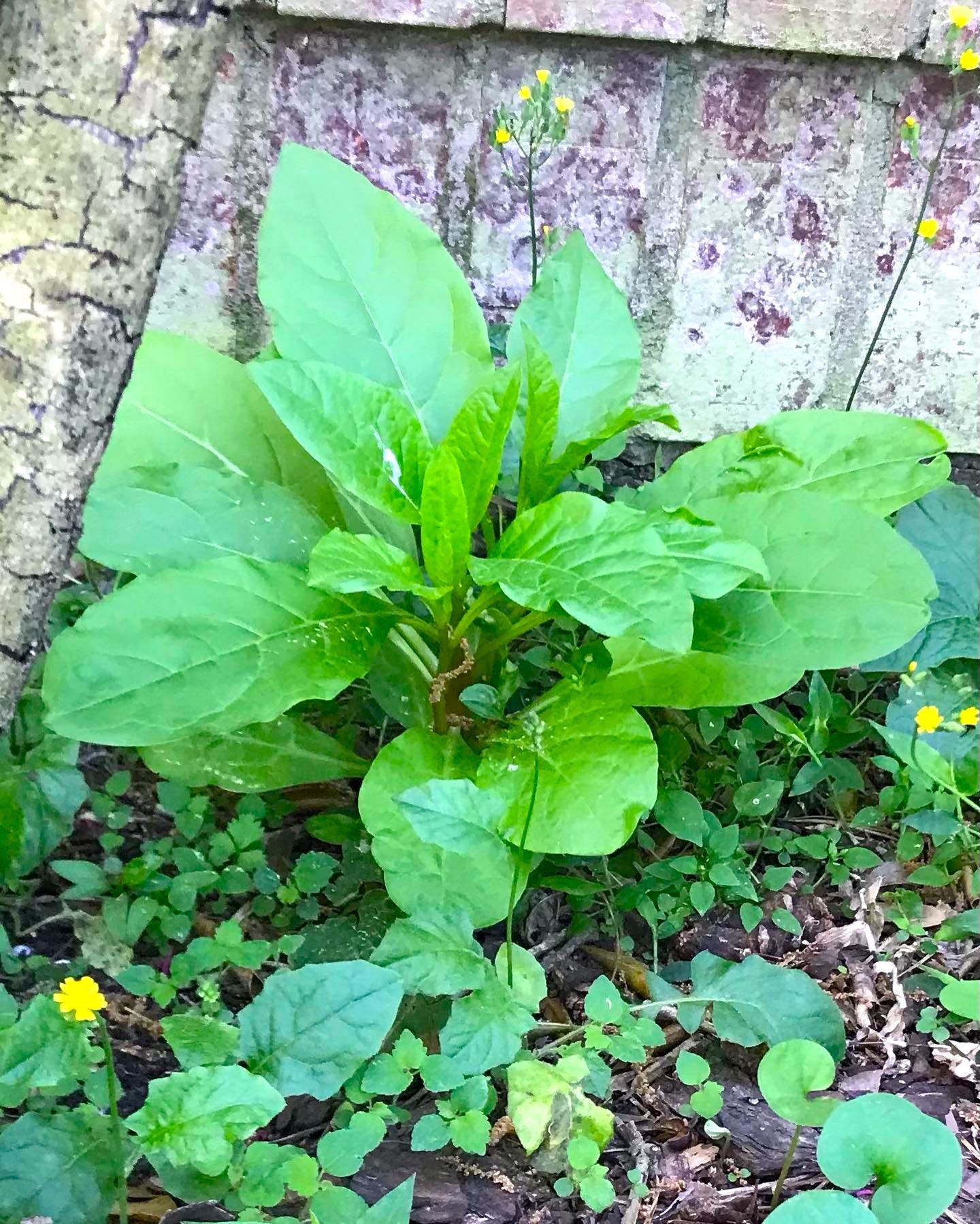
I’m pulling my hair out in frustration. Once again, social media is being flooded with “survival instructors” and even “licensed foragers” promoting the Universal Edibility Test to determine if a plant is safe to eat if you’re lost in the woods. This process was originally developed by the US military for soldiers that ended up in Escape and Evasion situations behind enemy lines, in hopes that they could find things to eat as they worked their way back to safety. For those of you blessed to have never heard of it, here’s the process.
US Military Universal Edibility Test
Do not eat for 8 hours before starting the test.
For the duration of the test, do not consume anything other than purified water and the plant you are testing.
Test only one part of one plant at a time. Separate the plant into its basic components – leaves, stems, roots, buds, and flowers. Select a small portion of a single part and prepare it the way you plan to eat it (cooked, boiled, raw, etc.)
Smell the plant part for strong or acrid odors. Remember, smell alone does not indicate a plant is edible or inedible.
Test for contact poisoning by placing a piece of the plant part you are testing on the inside of your elbow or wrist. 15 minutes is usually enough time to allow for a reaction, but you can leave it for up to 8 hours. This step can be performed during the 8 hour waiting period. If you feel tingling, burning, itching, numbness, a rash appears, or you experience any other negative reaction, discard and avoid the plant.
Touch a small portion of the plant part to your lips. Do not put it in your mouth yet. Hold it there for 3 minutes. If you experience any negative reaction, discard, and avoid the plant.
Place a small amount of the plant part on your tongue. Do not chew or swallow. Hold it on your tongue for 15 minutes.
If there is no negative reaction to holding the plant on your tongue, thoroughly chew the plant part and keep it in your mouth for 15 minutes. Do not swallow. If the plant part tastes soapy or bitter, spit it out and avoid the plant.
If no negative reaction occurs, swallow the chewed plant part. Wait 8 hours. If you experience any negative effects in this time, induce vomiting and drink lots of water.
If you experience no negative effects after 8 hours, prepare and consume ¼ cup of the same plant part. Wait 8 hours. If you experience any negative effects in this time, induce vomiting and drink lots of water. If you feel no side effects, the plant part can be considered safe to consume.
At first glance, this process seems reasonable to many. It is methodical, sounds scientific, and it has the stamp of approval from the US government so it must be great! Why do I hate it? Read on for multiple reasons.
U.E.T. Problems
There are too many options
The second step is “Separate the plant into its basic components – leaves, stems, roots, buds, and flowers. Select a small portion of a single part and prepare it the way you plan to eat it (cooked, boiled, raw, etc.)” Given that the average wild location has 300-600 different plants, you’re looking at 1500 to 3000 different possible choices, and that’s not including nuts, fruits, or berries. The chance of picking an advantageous plant part is extremely small. This is particularly an issue when you consider U.T.E.’s second big flaw.
It takes too long
The process starts by not eating anything for at least eight hours, followed by waiting periods between steps that add up to almost 18 hours per part of plant. This means you could only test nine different plant parts over the course of one week. Timing the process also requires care. Do you really want to be incapacitated with vomiting or diarrhea in the middle of the night when it’s too dark to find water or clean yourself up?
The error risk is too high
Many poisonous plants taste good while many nutritious one taste bad. The extremely common dog fennel (Eupatorium capillifolium) smells and tastes quite delicious but it’ll damage your liver. Bracken fern (Pteridium aquilinum) is another mild-flavored plant that will do similar damage. Tasty-looking pokeweed (Phytolacca american) leaves are reported to have a mild, grassy flavor, though followed by a Szechuan peppercorns tingle, but a few bites is enough to kill you in an a very messy and painful manner.
It’s unnecessary
Yes, being hungry sucks, but the average person can survive two or more weeks without calories, assuming they have safe drinking water (note to self, write an article about water) and can maintain their body temperature properly with clothing, shelter, and fire. You aren’t going to get calories from leaves, stems, buds, or flowers. You might get some from root tubers, inner bark of certain trees, nuts, and seeds, but there’s a lot more wrong than right choices for those. Plus, harvesting and preparing them burns precious calories. The risk vs benefits just doesn’t add up.
What You Should Do
Learn the area ahead of time
Seriously, how likely are you to end up lost in the wild of an unexpected part of the world? 99.999% of the time you’ll have some idea where you’re heading, so use that knowledge to prepare. If you’re concerned enough to memorize the U.T.E., refocus your efforts into looking up what are some key, calorie-supplying plants in that area. Of course, I must recommend my book, Outdoor Adventure Guides - Foraging to keep you safe and fed across the majority of North America. Any books by Nicole Apelion, Charles W. Kane, Peterson Guide, or Sam Thayer are also fantastic.
Learn basics of trapping & fishing
There aren’t any mammals, birds, or freshwater fish who’s meat will poison you if you eat them. Once the simple trap is made, no more precious calories are burned until you have the food in hand. The high calorie density of animals is believed to have assisted in the evolution of our powerful but calorie-demanding brain. Boil everything well, including animal brains, livers, eyes, skin, and cracked bones to maximize the calories and other nutrients acquired from the animal as well as minimize transfer of any parasites. If you don’t have a pot, roast on the coals of your fire. If you don’t have a fire, you really did screw up and will likely die of exposure before starvation.
In economics, “opportunity costs” describe how making one choice in how your time, money, and resources are used prevents other use of those limited items in other ways. Wasting time with the U.T.E. can be fatal in so many different ways and so relying on it is stupid. There’s better alternatives!
Supporting Merriwether’s Foraging Texas
In addition to subscribing to this Substack account, click the image below to make a one-time donation via Venmo.

You can also set up a repeating donation via Liberapay by clicking the yellow button below.

Upcoming Classes
Jan. 25th, 2026 Foraged Cooking Class at the Houston Arboretum (1pm-5pm)
Feb. 28th, 2026 Plant Walkabout near Wimberley, TX (9am-1pm)
Mar. 21st, 2026 Plant Walkabout near Wimberley, TX (8am-12pm)
Mar. 22nd, 2026 Plant Walkabout at the Houston Arboretum (1pm-5pm)
Apr. 25th, 2026 Plant Walkabout near Wimberley, TX (8am-12pm)
May 17th, 2026 Foraged Cooking Class at the Houston Arboretum (1pm-5pm)
May 30th, 2026 Plant Walkabout near Wimberley, TX (8am-12pm)
Thanks for reading Merriwether’s Substack!

What I read said, be hungry, touch only a piece of a plant, still be hungry, touch that piece more, still be hungry, eat that piece, still be hungry, eat a few more pieces, still be hungry... Holy crap. So basically, they are agreeing with you. Just starve and get over it.
Solid debunking of survivalist dogma. The opporunity cost angle is particularly sharp because everyone fixates on food scarcity when shelter and water are way more urgent in most scenarios. I once spent three days in backcountry with basically no calories and yeah it sucked but hypothermia would've killed me in hours. The 1500-3000 plant part calculation really undercuts the practcality argument.