
Processing Acorns - Part 1.
There’s a reason acorns smell like beer

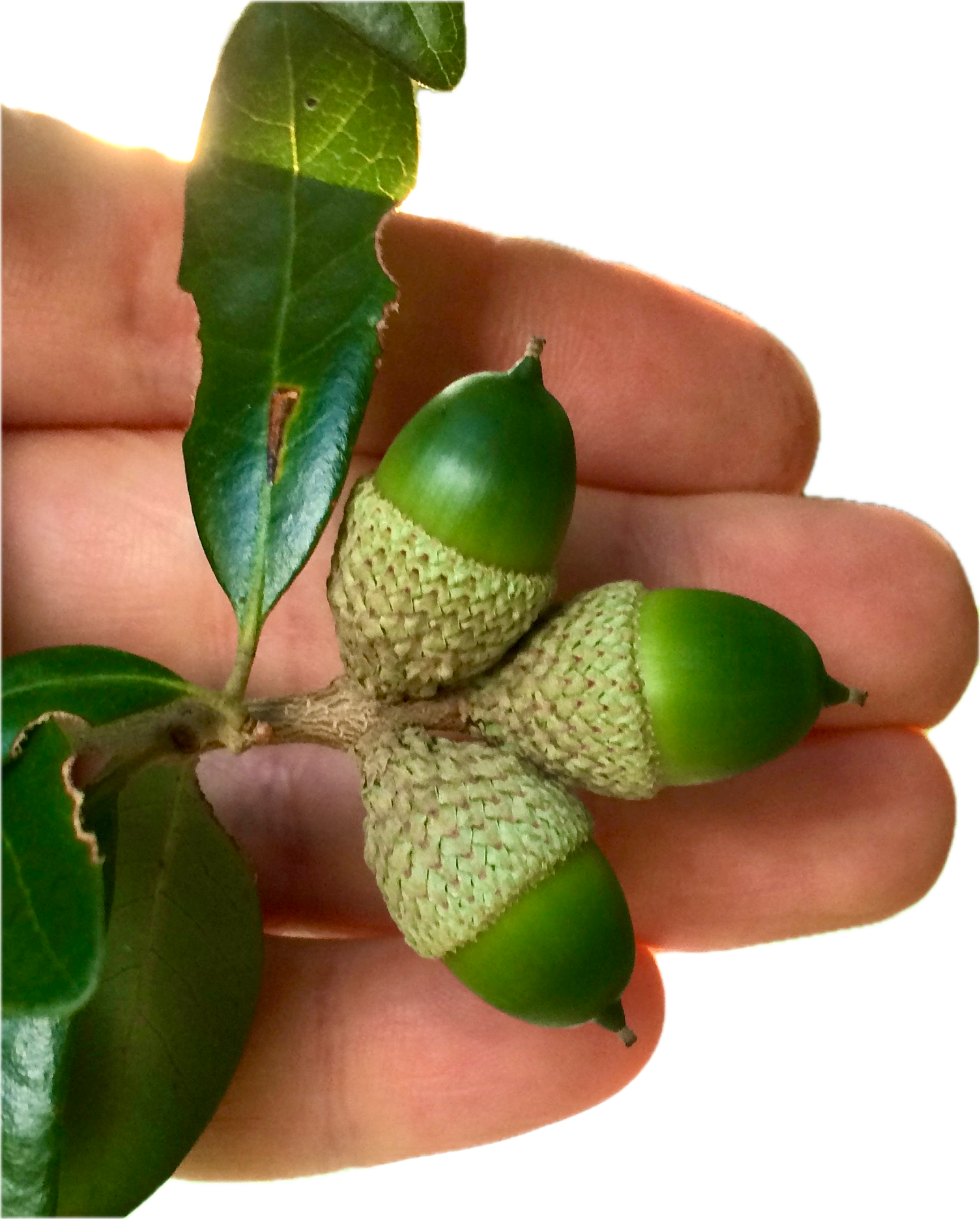
One of ancient humanity’s favorite foods were acorns. They’re loaded with calories, are easily collected by the thousands, and can easily be used in many different ways. However, if you’ve ever tried eating a raw acorn, you probably are wondering, “How?!” right now. Acorns are loaded with an astringent, bitter compound called tannic acid which tastes terrible and quickly dries out the mouth. This compound makes it impossible for a human to eat more than one acorn right off the tree. So why was it so favored?
Luckily, tannic acid is extremely soluble in water. Early humans figured out that if they placed crushed up acorn meat in a basket or woven bag, then placed it the running water of a stream or river for a while, they were rewarded with calorific abundance. In ye old stone days, this was truly a treasure!
If you have access to an oak tree and running water, you can tap a food source much loved by your ancestors and often critical for their survival. You may be thinking “Wait, I’m not soaking my food in a wild stream for several days!” but you won’t have to. I’ll be sharing my way of easily leeching out the tannins using an outdoor faucet instead of stream containing Lord knows what.
But first, we need to collect acorns. They can be picked up off the ground but be warned, many of those will likely end up unusable due to fungal attack. When possible, gather nuts still attached to the oak tree. An easy way to do this is place a tarp or sheet under the tree, then respectively whack its branches with a long stick to knock free ripe acorns. Gather then fallen food from the tarp and you’re ready to begin. Note, it does NOT matter what type of oak tree you have, as long as it’s producing acorns.
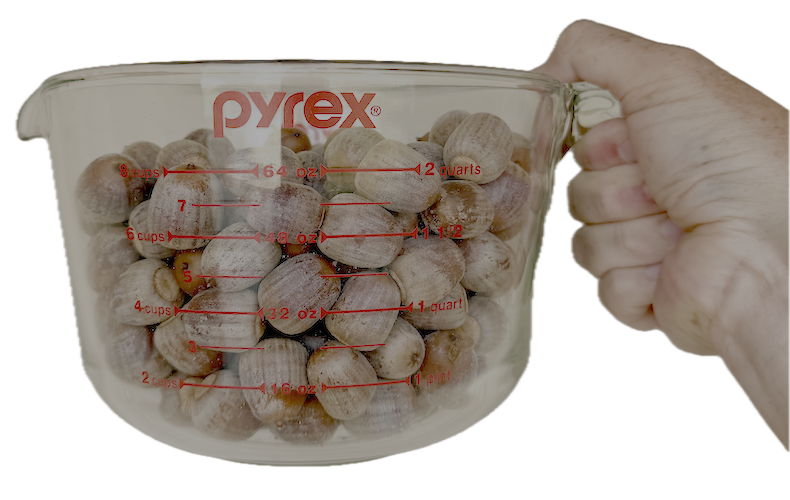
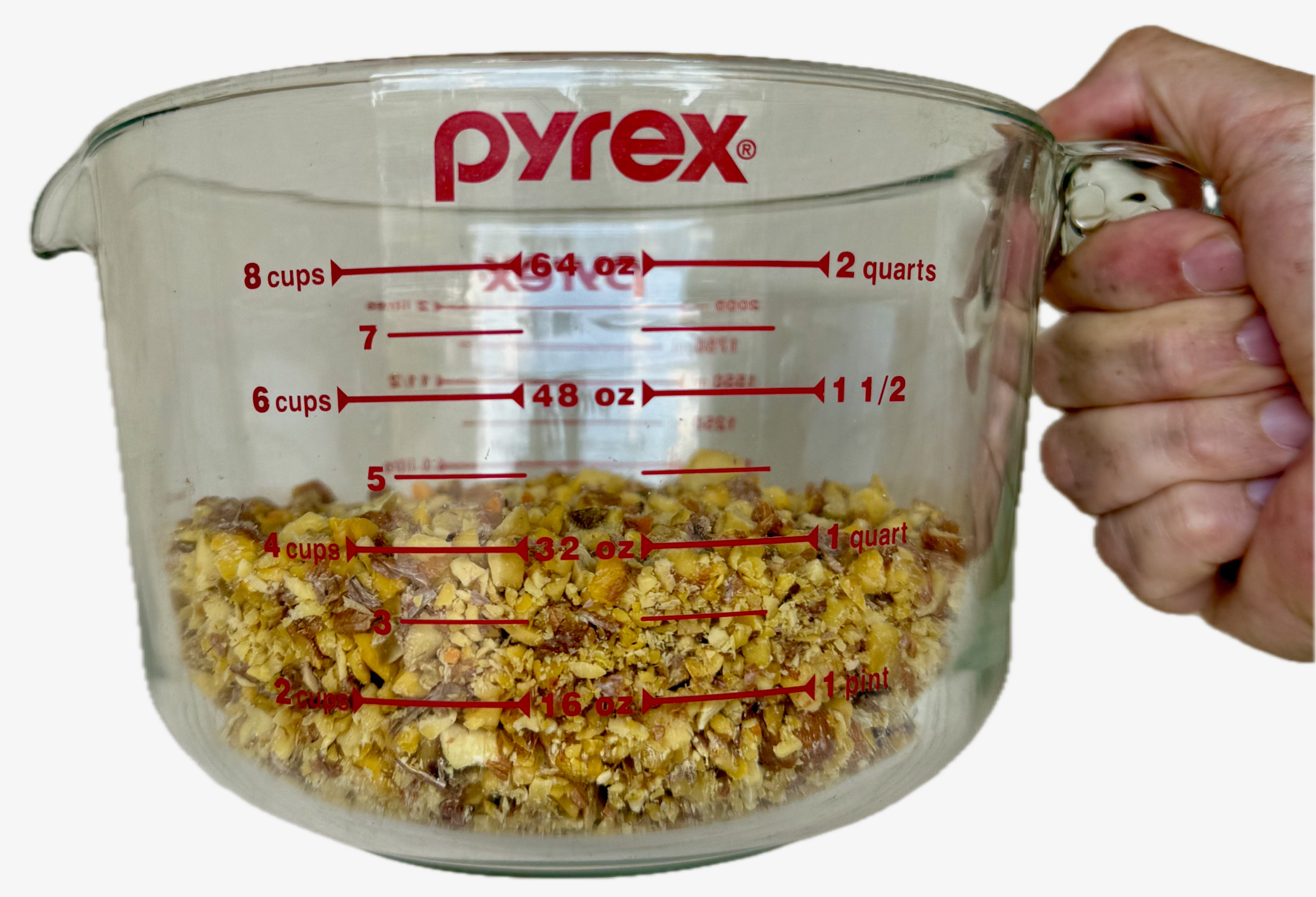
I like to start the process with 8 cups of acorns (caps removed). This will give me 3-4 cups of edible acorn meal when everything is done, but also it’s about as many acorns as I care to shell in one sitting. Use a standard nutcracker or pliers to break the shells off the meat. Discard any nuts that have dark stains, blemishes, or signs of weevil holes. This will leave you with 4-5 cups of acorns. Intact like this, they won’t have enough surface area exposed to water for proper leeching, so you need to chop them up in a blender using the “crushed ice” setting until the pieces should be under 1/4” across. Do a handful at a time rather than all at once for most uniform chopping.
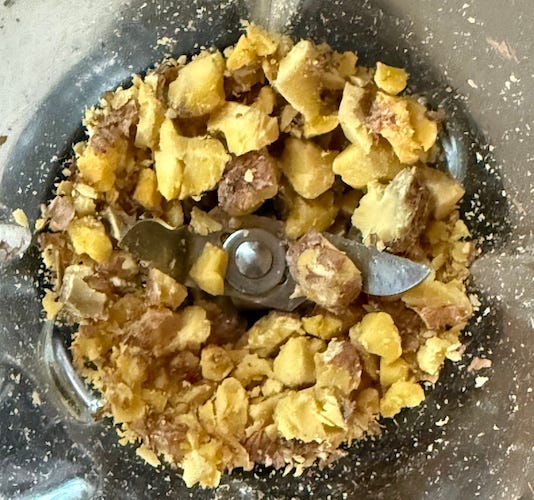
Did you notice a beer-like smell as the acorns were crushed? One of the things that sets acorns apart from most other nuts is they contain up to 50% starch, making them an excellence replacement for grains in the production of beer. Acorn beer was the go-to for European peasants since grain was too valuable for bread! As we get later in the season, some of the acorn starch may have already begun fermenting, releasing a smell of beer.
Now we’re ready to leech. I use a device similar one designed by the famous 60s-70s godfather of foraging, Euell Gibbons, author of the classic Stalking the Wild Aspargus.* It’s simply a piece of PVC pipe, approximately 18” long with an interior diameter of 1.5”. One end is capped with the toe of an old, clean sock held in place with a heavy rubber band. The other end has a wire bail attached. The pipe is filled with chopped acorns to about 2” from the top, then hung from an outdoor faucet by the wire bail. Turn on the faucet just enough so that the pipe almost completely fills with water, matching the rate at which the water flows out the bottom. Now we wait.
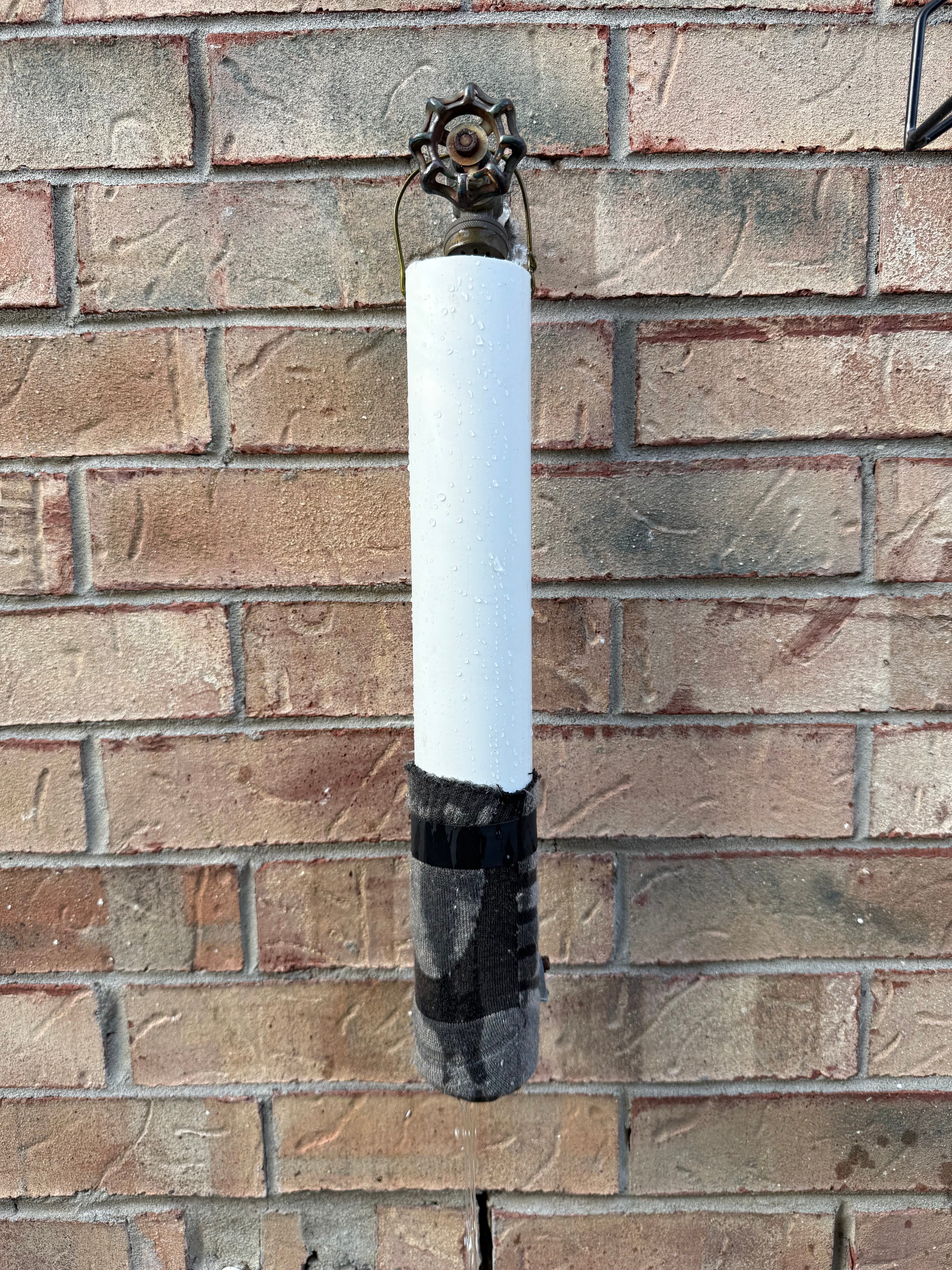
The amount of flushing can vary quite a bit based on specific species of oak, size of acorn pieces, and even the weather over the summer. Let the water run through the acorns for at least six hours. At that time, taste a bit of the water coming through. If the water still has a bitter flavor, let it go another four hours then re-taste. Repeat this taste-flush four hours-taste until the water no longer has any hint of bitterness. Note, you want to do this outside as the tannic acid is yellow in color and can stain sinks, showers, and bathtubs if done inside.
If the water tastes okay then dump out the acorns into a colander lined with a thin, cotton towel to drain and absorb as much remaining water as possible. Nibble on a few pieces of the nut meat to confirm they are no longer bitter or astringent. What you do next depends on your end use for the acorns. I’ll cover different possibilities and treatments for those next week in Part 2.
Upcoming Classes
Nov. 30th, 2025 Plant Walkabout near Wimberley, TX (9am-1pm)
Dec. 6th, 2025 Plant Walkabout near Wimberley, TX (9am-1pm)
Dec. 10th, 2025 Presentation at Mercer Arboretum in Humble, TX (12pm-2pm)
Dec. 13th, 2025 Plant Walkabout at San Jacinto Battleground near Houston, TX (9am-12pm)
Jan. 25th, 2026 Foraged Cooking Class at the Houston Arboretum (1pm-4pm Details Coming)
Feb. 28th, 2026 Plant Walkabout near Wimberley, TX (9am-1pm)
Mar. 21st, 2026 Plant Walkabout near Wimberley, TX (8am-12pm)
Mar. 22nd, 2026 Plant Walkabout at the Houston Arboretum (1pm-4pm Details Coming)
Apr. 25th, 2026 Plant Walkabout near Wimberley, TX (8am-12pm)
May 17th, 2026 Foraged Cooking Class at the Houston Arboretum (1pm-4pm Details Coming)
May 30th, 2026 Plant Walkabout near Wimberley, TX (8am-12pm)
June 13th, 2026 Plant Walkabout near Wimberley, TX (8am-12pm)
Supporting Merriwether’s Foraging Texas
In addition to subscribing to this Substack account, click the image below to make a one-time donation via Venmo.

You can also set up a repeating donation via Liberapay by clicking the yellow button below.

*As an Amazon Influencer, I am required to tell you if you purchase anything from the Amazon links I post, I will receive a sales commission.
What is the best way to store the acorn meal?
Thanks!
I've had acorn flour pancakes before and they were pretty tasty. Thanks for sharing.